
We help organisations turn the way they actually win — the patterns, the IP, the tribal knowledge — into running software, operating practice, and durable competitive advantage.
Anthologic is a senior advisory and capability‑build practice. We work alongside executives on strategy deployment, capability engineering, and the transition from generic SaaS to bespoke, AI‑enabled experiences that encode their firm's intellectual property.
Most clients of professional services are buying the operating model their firm had a decade ago. The work itself has moved. We named the trends in 2016 and they have aged into the present tense.
Consulting firms once captured talent and brokered access to it. The new generation of firms — Internal Consulting Group, Expert360, the broad on‑demand expert market — explicitly broker the talent layer and commercialise IP as standalone information products. Talent and IP separate.
The old SI bundle — IT outsourcing with process, change, and program disciplines bolted on — is becoming something different. To create capabilities that genuinely combine people, process, information, and technology, you cannot run them as parallel work streams. You have to redesign the delivery itself.
The "as‑a‑service" trend will not stop until services include both the software and the consulting components, delivered by the same firm or tightly integrated ecosystem. If your industry has a software vendor, your industry has a consulting competitor — and they own the data, the tooling, and the language of the work.
When the cost of bespoke software collapses, expectations rise. Clients increasingly look at the end of an engagement and ask, reasonably, where the working software is — the operating tools, the persistent artefacts, the IP encoded as something the firm keeps. Decks and frameworks alone now feel like the work that was, not the work that is. Our answer is the Client Experience Platform at experience.anthologic.com.au — a growing library of bespoke, AI‑built experiences that turn analysis and stakeholder work into operating tools your firm owns.
Most firms work at the level of the engagement. We work at the level of collected works — patterns of organisational design that recur across companies, industries, and decades. We study not just what organisations intend to do, but how their approaches play out against incentives, politics, and economics.
That analytical level matters because it tells us when to replicate a pattern (because re‑inventing it is waste), when to avoid it (because adopting it would erode a real source of advantage), and when to counter‑pattern it (because enough organisations are stuck in a common gap that there is a market in solving it).
And because narrative — the story you tell about what you do — is itself part of what makes a capability work, we treat narrative as the connective tissue between the commodity capabilities you buy from the market and the unique capabilities that distinguish you. It is not just what you are doing that counts, but the story you create around it.
Each volume is a body of practice — a way of seeing and a set of methods we bring to client work. They are not service lines; they are how we think.
Deep, differentiating change is hard. It is one thing to boil an idea down to its essence; it is another to make it both easy to understand and hard to replicate. We work at the level of patterns across organisations — and the narrative that turns a common capability into a distinctive one.
It is not just what you are doing; it is the story you create around it.
There is "strategy" and there is "execution" — and there is the continuous process that bridges the gap between them. We design and run that process: structured strategic mandate, prioritisation, capability targeting, and delivery cadence. Sometimes we have to first reverse‑engineer your strategy from what business units are actually doing. We see that as part of the same continuum.
When we implement change we are simultaneously working across functions, across disciplines, and across people, process, information, and technology. Capability Engineering is the integrating discipline — proprietary templates, increments, and roadmaps that turn intent into operating reality.
We integrate people, process, information, and technology — without placing one above the other.
From early experiments in generative AI to the organisational design changes required for an enterprise to reason at scale. AI is not a tool you procure; it is a redesign of how the organisation thinks, decides, and acts. Current focus areas: cybernetics and the Viable Systems Model, the Digital Twin of an Organisation, enterprise modelling and simulation, graph databases and model context, and market‑based management of firms.
"I describe myself as a management architect because I combine the discipline of management and the discipline of architecture in everything I do. The secret, if there is one, is that I refuse to put any of people, process, information, or technology above the others. Where most build an integrated view of one or two and leave the rest as 'details', I build the integrated view across all four."
However the relationship begins, the underlying work is the same: integrate people, process, information, and technology around your strategic mandate. The choice is the shape of the engagement and what gets built along the way.
Thirty years of insight, advice, and hands‑on assistance, delivered as a senior extension of your office. We work alongside program leadership, enterprise risk & compliance, architecture, customer and service design, business process, digital and IT.
The role flexes — sometimes pure counsel, sometimes operating Chief of Staff, sometimes a focused architecture or strategy engagement. What stays constant is a commitment to your key objectives, your tempo, and your voice.
Sponsor interviews, scan of existing materials, a tailored approach presented at the formal kick‑off.
Top‑down, strategic. Three to four stakeholder types; outside‑in and inside‑out; capability assessment; reference architecture.
Concurrent, bottom‑up, fact‑based. Reviewing existing artefacts, generating insights, testing them with stakeholders.
Transparent decision rules, named constraints, and agreement‑in‑principle from the people who matter.
Heads down, quiet time. Deliberate isolation to bring analysis and engagement into a set of work products.
The medium‑term overview, the immediate actions, and the disciplines required to sustain the work.
A capability we implant inside your organisation: AI‑enabled bespoke software that encodes your intellectual property as working experiences. Not a portal you log into; not a SaaS you rent. A practice your team owns.
Because AI‑enabled coding has collapsed the cost of bespoke software, the case for renting commodity workflows from generic SaaS vendors weakens by the quarter. We use commodity infrastructure at the platform layer (hosting, database, authentication — Render, Supabase, or equivalent). The differentiation lives in what gets built on top.
Built with AI. Not necessarily run by agents. We deliberately balance agentic systems with traditionally coded solutions — choosing the right tool for the value at hand, not the trend of the quarter.
Hosting, deployment path, authentication, and initial administration modules. Commodity stack, configured for your environment.
The first working experience, shipped with just‑enough branding. Reach value before you reach polish.
Quick cycles from idea to refinement across multiple experiences. The pipeline proves itself; appetite expands.
Client resources move into the pipeline. The work becomes an internal capability your team runs.
Forward planning to mature and maintain. Governance, prioritisation, and the rhythm of continued value.
The Client Experience Platform is not a slide. It's a live environment of modules — each one a small, bespoke experience designed to do real work inside an engagement. When the practice transfers to your team, your version of this library is yours.
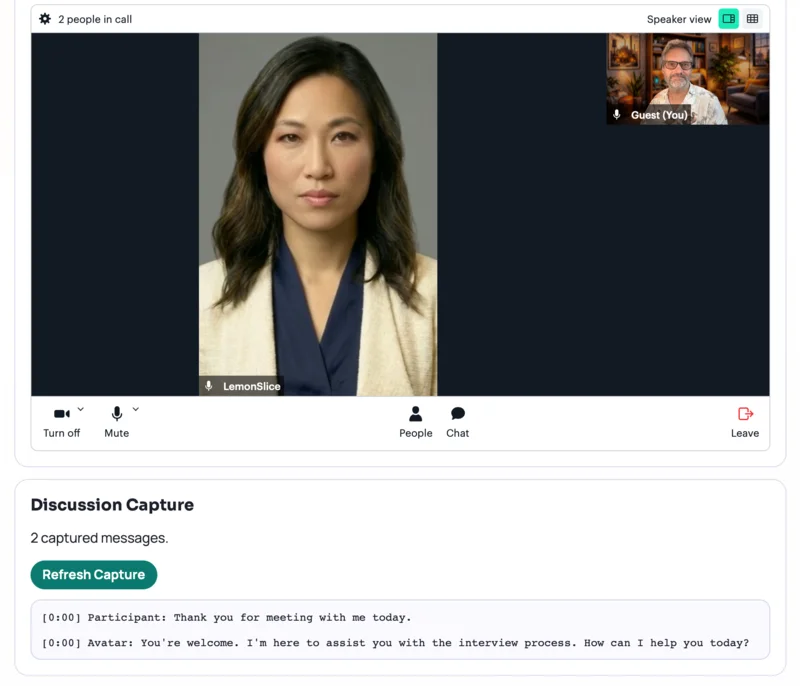
Run an audio interview from a markdown script; save the transcript and structured Q&A results.
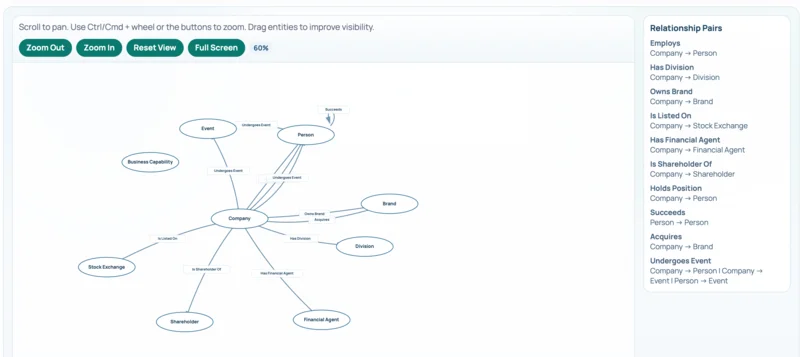
Upload documents, discover the entities and relationships they imply, then rescan into structured, evidence‑backed data.
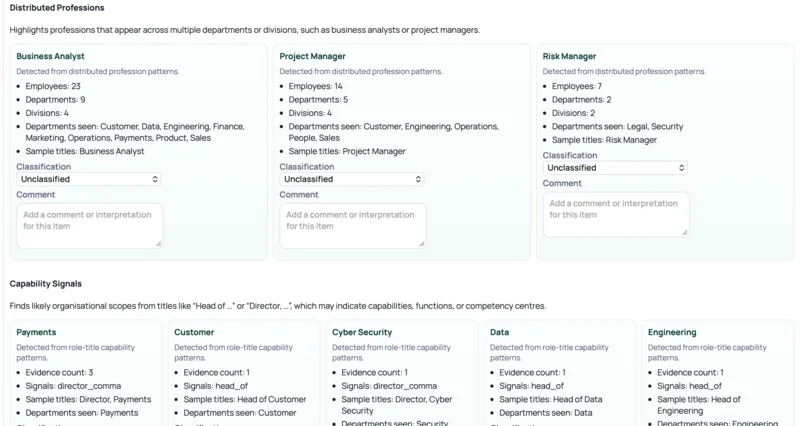
Load and maintain organisational chart extracts with reporting lines and optional HR metadata.
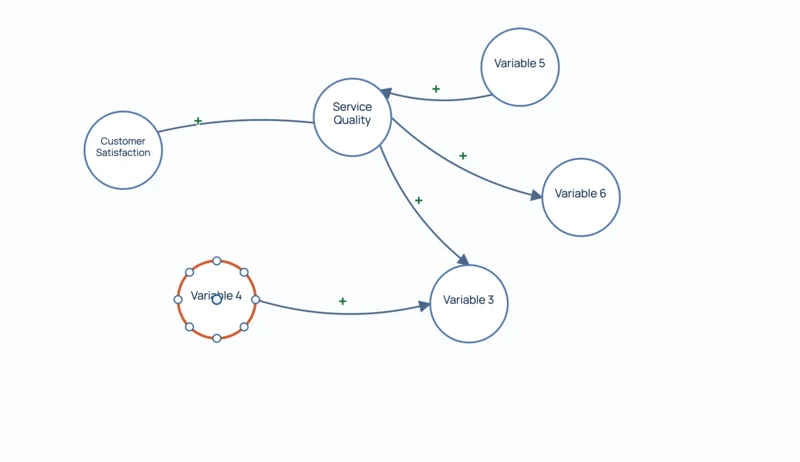
Visual causal loop editor with collaborative, concurrent editing.
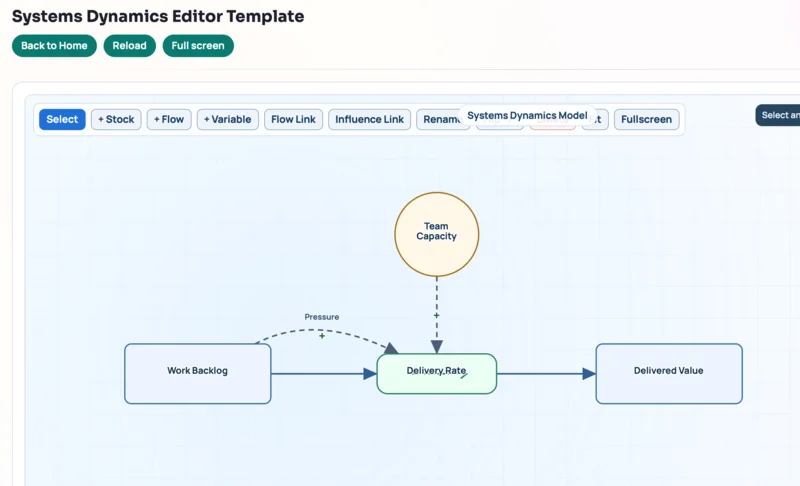
Visual systems dynamics modelling with in‑canvas, in‑situ editing and a fullscreen workspace.
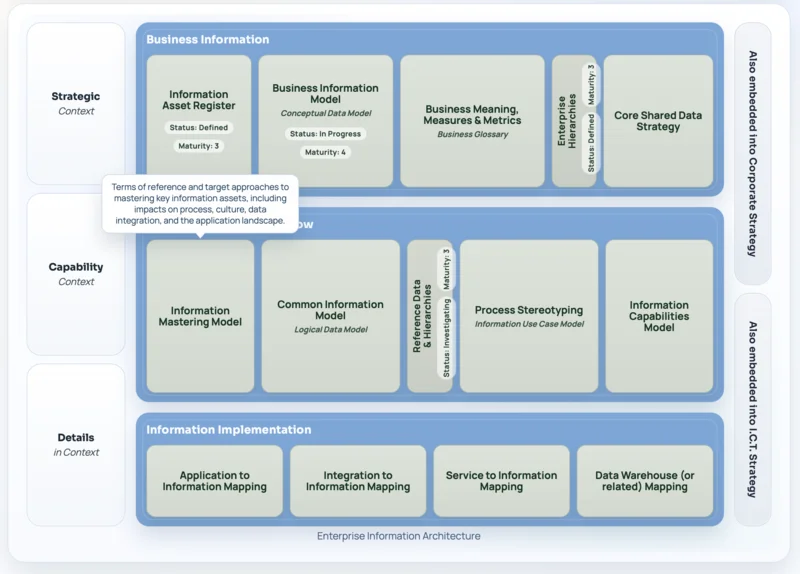
Layered architecture view for enterprise business information, structure, flow, and implementation.
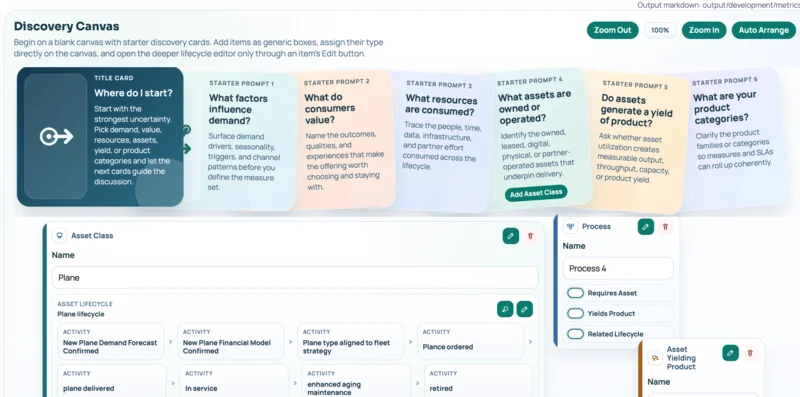
Discover and agree lifecycle measures, service boundaries, demand factors, and value factors.
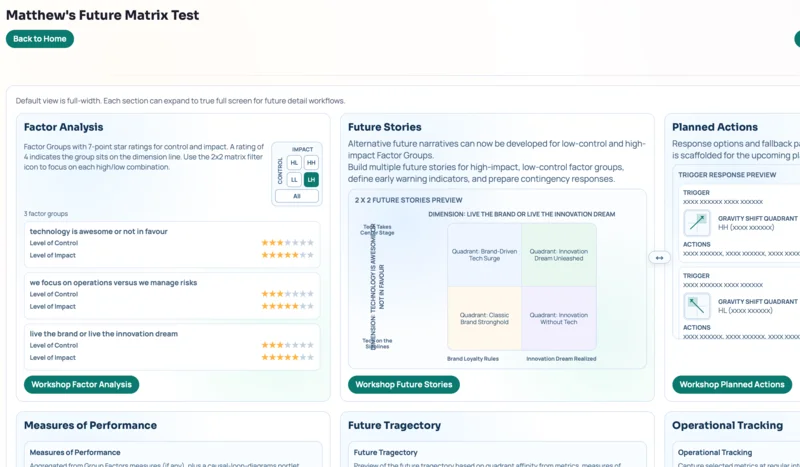
Three‑part planning canvas for factor analysis, scenario stories, and contingency plans.
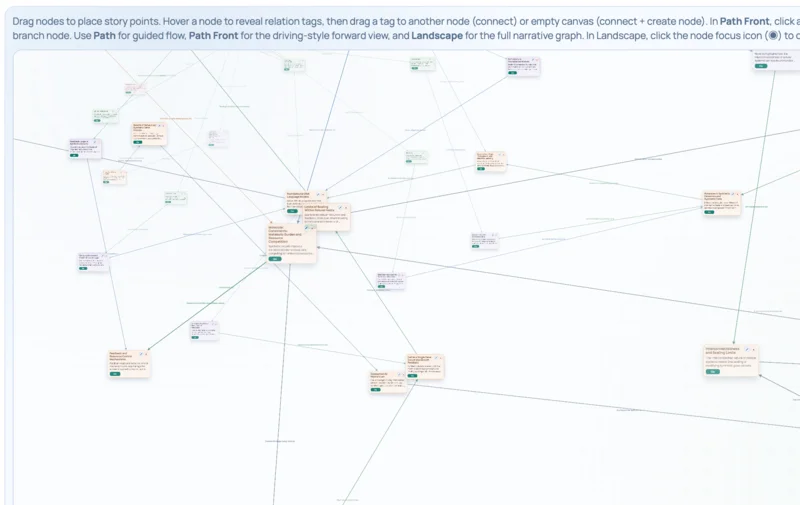
Map story points as a navigable narrative graph with objection branches, support links, and path‑focused exploration.
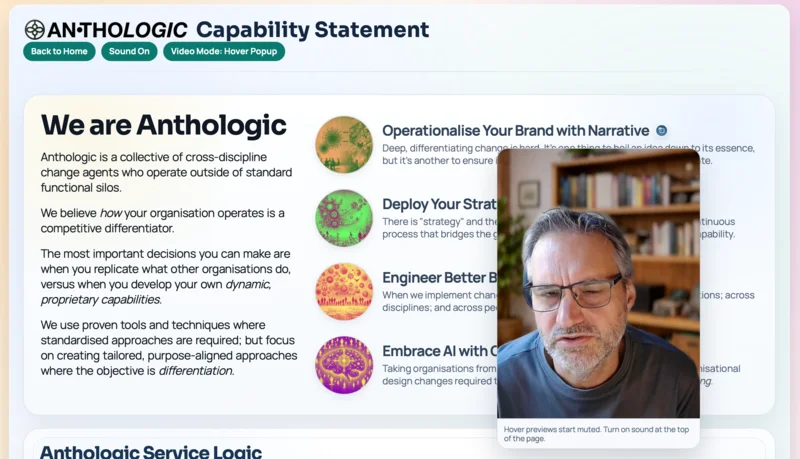
Visual capability statement showing service logic, delivery pillars, and underlying functional capabilities.
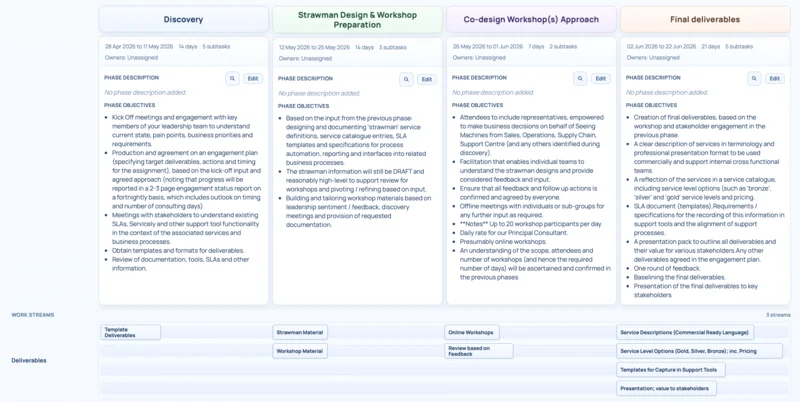
Collaborative planning that also builds a roadmap for the sales proposal.
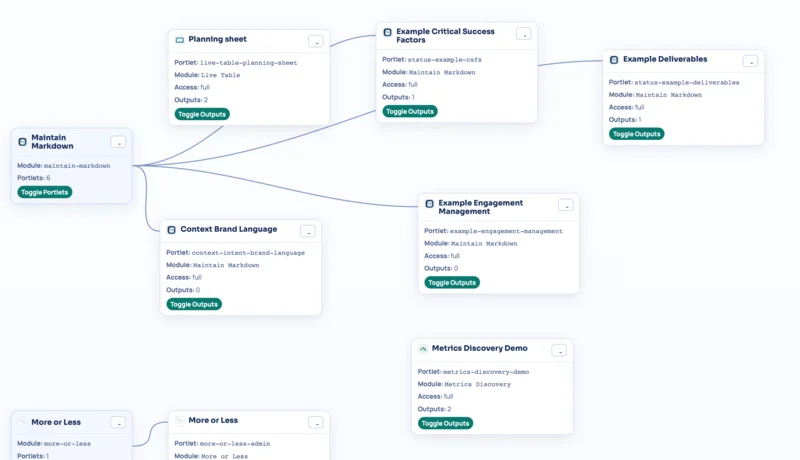
Compile output files into a finished Word document, with markdown and image conversion handled for you.
Authenticated role-based access
Secure, permissioned access means the right people see the right content — client teams, stakeholders, and sponsors each with their own view.
AI agent access via MCP
Modules are accessible to AI agents via Model Context Protocol — enabling automated content creation and structured population of any module at engagement pace.
Interoperability & graph exploration
Modules share a common data layer. Output from one becomes input to another — navigable through a graph data explorer that reveals connections across the whole engagement.
A short, partial selection drawn from three decades of senior delivery — the industries, clients and capabilities that inform how Anthologic works.
The shape of a typical engagement: a senior practitioner working alongside the executive sponsor and program leadership, with named clients including Healthdirect Australia, WaterNSW, Cochlear, QBCC, Crosslake, Campbells, Macquarie Group, NBN Co, ServiceNSW, and others.
Engagement types include: enterprise data governance & stewardship; business architecture & capability modelling; enterprise architecture & technology strategy; strategy deployment roadmaps; due diligence and carve‑out planning; AI / advanced analytics governance; product strategy.
The preference is for asset‑heavy industries undergoing disruption or self‑initiated transformation.
As Head of Strategy & Innovation at Aware Services, was the first hire and helped grow the firm to 100+ billable consultants in four years prior to its acquisition. Built the cross‑practice go‑to‑market proposition (The Aware Enterprise · Intelligent Information · Customer Oriented Organisation) that powered the growth — the same kind of go‑to‑market and capability work we now bring to clients under the Anthologic brand.
A small set of CEP‑style experiences built in partnership with Olive Professional Services, combining algorithms with generative AI. Each is a working example of what bespoke, IP‑encoded software looks like when the consulting and the software are built together.
Treating the organisation chart as a network and surfacing its real connectivity, choke‑points, and brokerage roles — beyond the boxes and lines.
Production‑grade consulting artefacts generated from primary inputs — closing the gap between analysis and finished deliverable.
Engagement video content generated from working artefacts — turning the body of an engagement into a narrative that travels.
Themes are the areas in which we have deepest pattern‑library, sharpest views, and most replicable approaches. They are where Anthologic's collected works do their heaviest lifting.
Corporate datasets reveal the footprints of our past. Modelled as digital twins, they begin to show us our possible futures — and the structural choices that decide which one we get.
Optimising organisational performance takes more than a central analytics team servicing too many stakeholders. It requires modelling value across the business model itself, and targeting analytics accordingly.
The way most organisations have implemented agile practices has done little to enhance awareness or alignment. A balanced approach — Awareness, Alignment, and Agility — is required for agility to produce its promised return.
Taking AI from initial value‑seeking experiments to a comprehensive organisational design — automation, decision rights, escalation paths, and the operating model the new capability demands.
Enhancing the effectiveness of the CEO while improving continuity of governance and the quality of board information flow. The most leveraged seat in the organisation deserves the most considered support.
Our lean business transformation framework, distilled from twenty‑five years of writing on market‑based management. Everything we have learned about managing through strategic pivots, expressed as a method.
Co‑creating new propositions, including white‑label propositions for partners and platforms — building from commodity resources toward defensible market positions.
Our take on capability‑based planning. The discipline of creating differentiating, hard‑to‑replicate bundles of capability that combine people, process, information, and technology — without placing one above the other.
Engagements span the practitioner's career and include work delivered through prior organisations and advisory roles.
We are happy to discuss any opportunity with any client. We will probably even pay for the coffee. Where the interests align, we are also happy to co‑design services in partnership.
Get in touch